Logging temperature and precipitation data
Instruments only become useful once their readings are written down in a consistent form. A backyard log does not need to be elaborate, but it does need to be regular, dated, and honest about gaps.
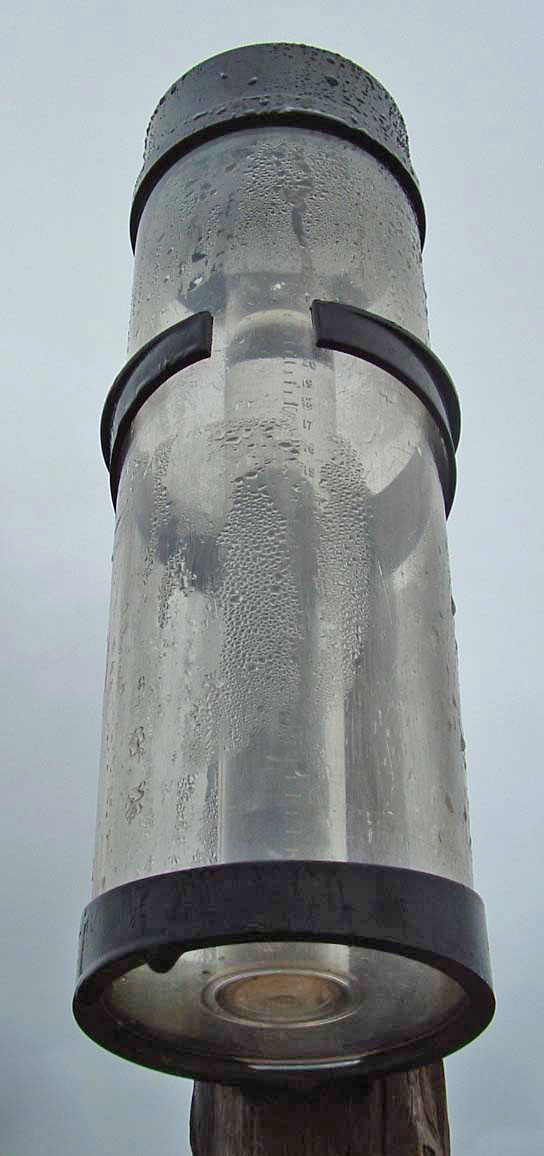
Choosing a recording interval
For temperature, an automatic logger that stores a reading every few minutes captures the daily high and low cleanly. If you are reading manually, fixed times each day are more practical: a morning and an evening observation already reveal the daily swing. The important thing is to keep the times consistent so that one day can be compared with the next.
Precipitation is usually recorded as a daily total. Volunteer networks commonly read the gauge once each morning and log the amount that fell in the previous twenty-four hours. Reading at the same hour every day removes ambiguity about which day a given rainfall belongs to.
A simple daily entry
A workable manual log records, for each day: the date, the morning and evening temperature, the daily minimum and maximum if the thermometer holds them, the precipitation total, and a short note on conditions such as fog, frost or heavy snow.
Handling frozen precipitation
Snow is where backyard logs most often go wrong. A rain gauge cannot simply add snowfall to its rainfall column, because what matters for comparison is the water content. The common approach is to record snow depth separately, then melt a measured sample of fresh snow and record the resulting liquid as the water equivalent for that day.
Freezing also affects the gauge itself. Liquid left in a cylinder gauge can freeze and crack it, so gauges are often emptied before a hard frost or swapped for a winter routine of catching snow on a board. Noting in the log when the gauge was out of service is better than leaving an unexplained gap.
Keeping the record comparable
Note the conditions of measurement
A reading means little without context. If the thermometer was moved, the shelter repainted, or the gauge relocated, write it down. These notes explain sudden shifts that would otherwise look like real weather changes.
Be explicit about gaps
Missed days happen. Mark them as missing rather than guessing a value or carrying the previous reading forward. An honest gap is easy to work around later; a fabricated number quietly corrupts every average that includes it.
Back up the log
Whether the record lives in a paper notebook, a spreadsheet or a logging app, keep a second copy. A single device failure should not erase a season of patient observation.
Logging checklist
- Read at consistent times and log the date with every entry.
- Record snow depth and melted water equivalent separately.
- Protect or retire the rain gauge before hard frost.
- Mark missing days as missing; never invent a value.
- Keep a backup copy of the record.
Comparing your record
Once a log spans several months, it can be set against regional figures published by Environment and Climate Change Canada. Volunteers who want their precipitation readings to contribute to a wider dataset can look at networks such as CoCoRaHS, which document standard reading routines.